Timer guide
How to choose an outlet timer
Four ways a timer decides when to switch, and how to match one to your lamp, your lights or your pump.
An outlet timer sits between the wall and whatever you plug in, and switches the power on and off for you. The question that decides which one you need is simple: what should tell it when to switch? A clock, the daylight, a program, or your own hand on a remote.
Four ways a timer decides
| Timer | How you set it | Best for | After a power cut |
|---|---|---|---|
| 24-hour pin dial | Push down a pin for each half hour on | Same hours every day: lamps, fans, porch lights | Runs behind by the outage, turn the dial back to time |
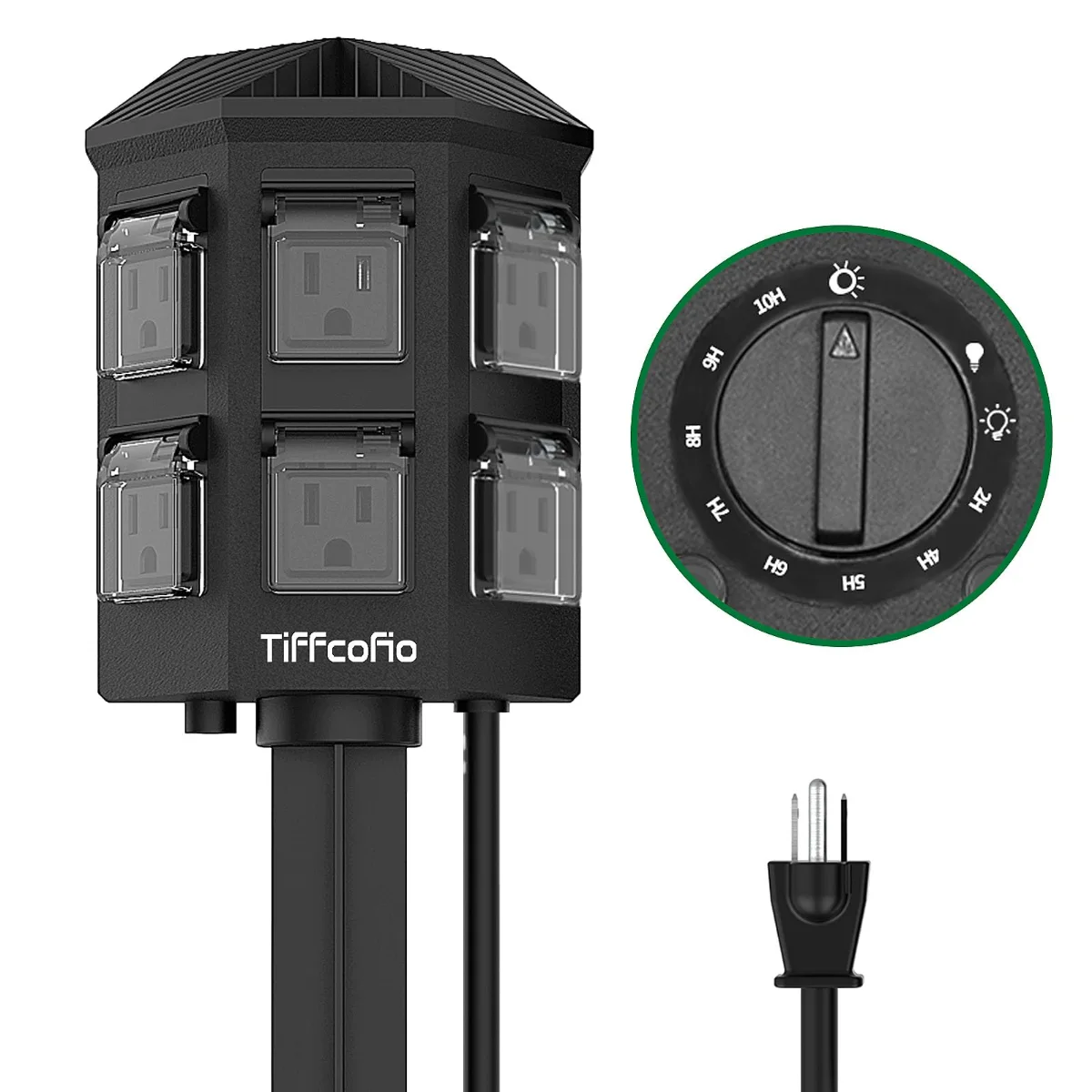
| Dusk-to-dawn sensor | Pick a mode on the dial: on at dusk, off after 2 to 10 hours or at dawn | Outdoor lights that should follow the sunset | Carries on, since it reads the light |
| Digital program | Turn the knob to a program slot and set on and off times | Two or more schedules a day, pumps, different weekdays | Check the clock on the display |
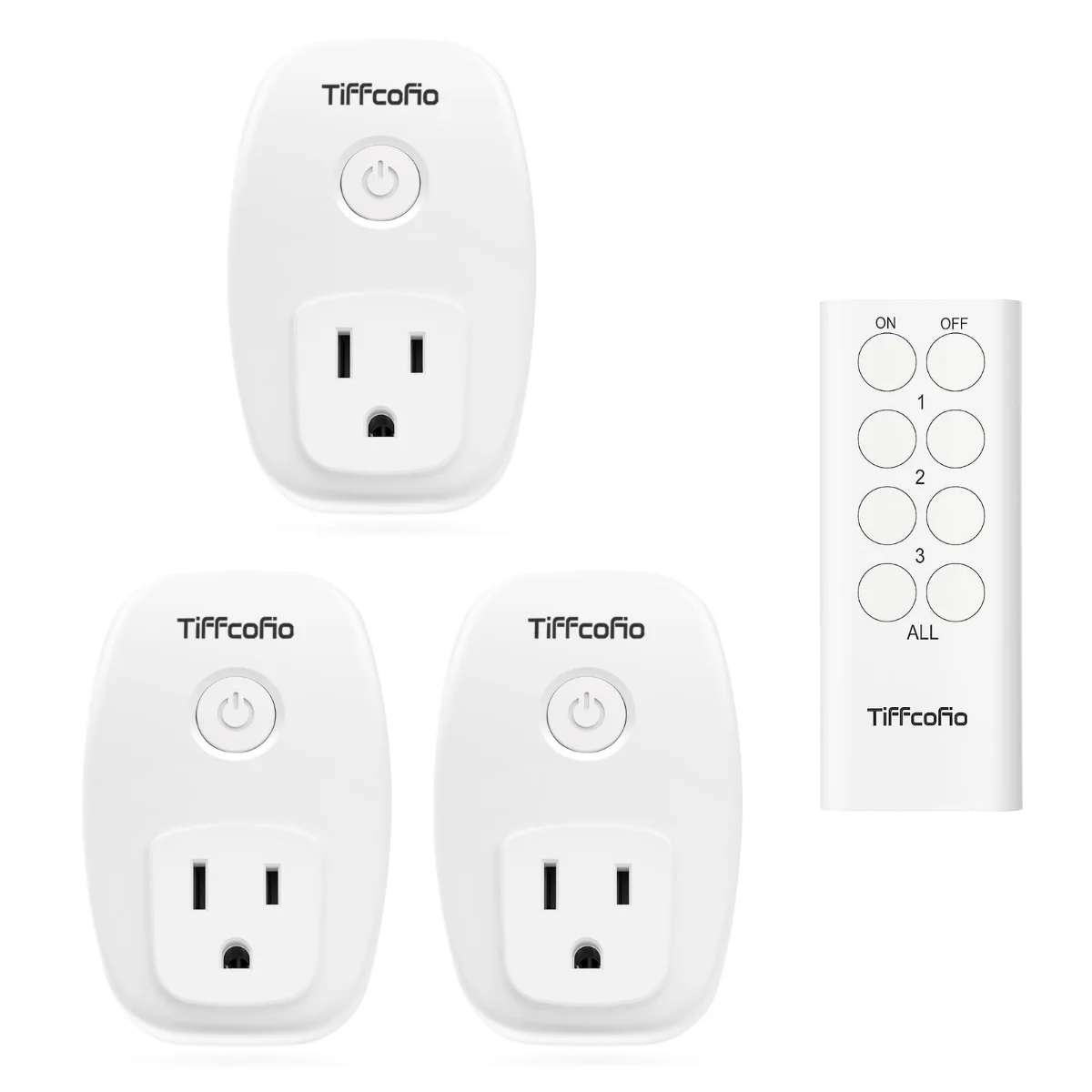
| Remote or countdown | Press a button when you want it | Lamps behind furniture, a fan you forget | Nothing to reset |
The pin dial: simplest, and it repeats
A mechanical timer has a dial marked with the 24 hours and a ring of pins. Turn the dial until the current time sits at the arrow, push down the pins for the stretch you want the power on, and the dial repeats that pattern every day. Most of our pin timers use 48 pins of 30 minutes. The heavy-duty outdoor timer uses 96 pins of 15 minutes for a pump that runs in short bursts.
The light sensor: on at dusk, whatever the date
A dusk-to-dawn timer has a photocell that sees the sky. It switches on as it gets dark and off after the number of hours you pick, or at dawn. The lights come on at 5 p.m. in December and at 8:30 p.m. in June without you touching anything. Point the sensor at open sky, away from the lights it controls: a lamp shining on it looks like daylight.
The digital timer: several schedules
A digital timer holds several on and off programs. Ours are set by turning a knob to each program slot, so there are no key combinations to remember. The 7-day outdoor timer holds eight programs and can run different ones on different days, with a replaceable battery that keeps them through a power cut.
The remote: the switch comes to you
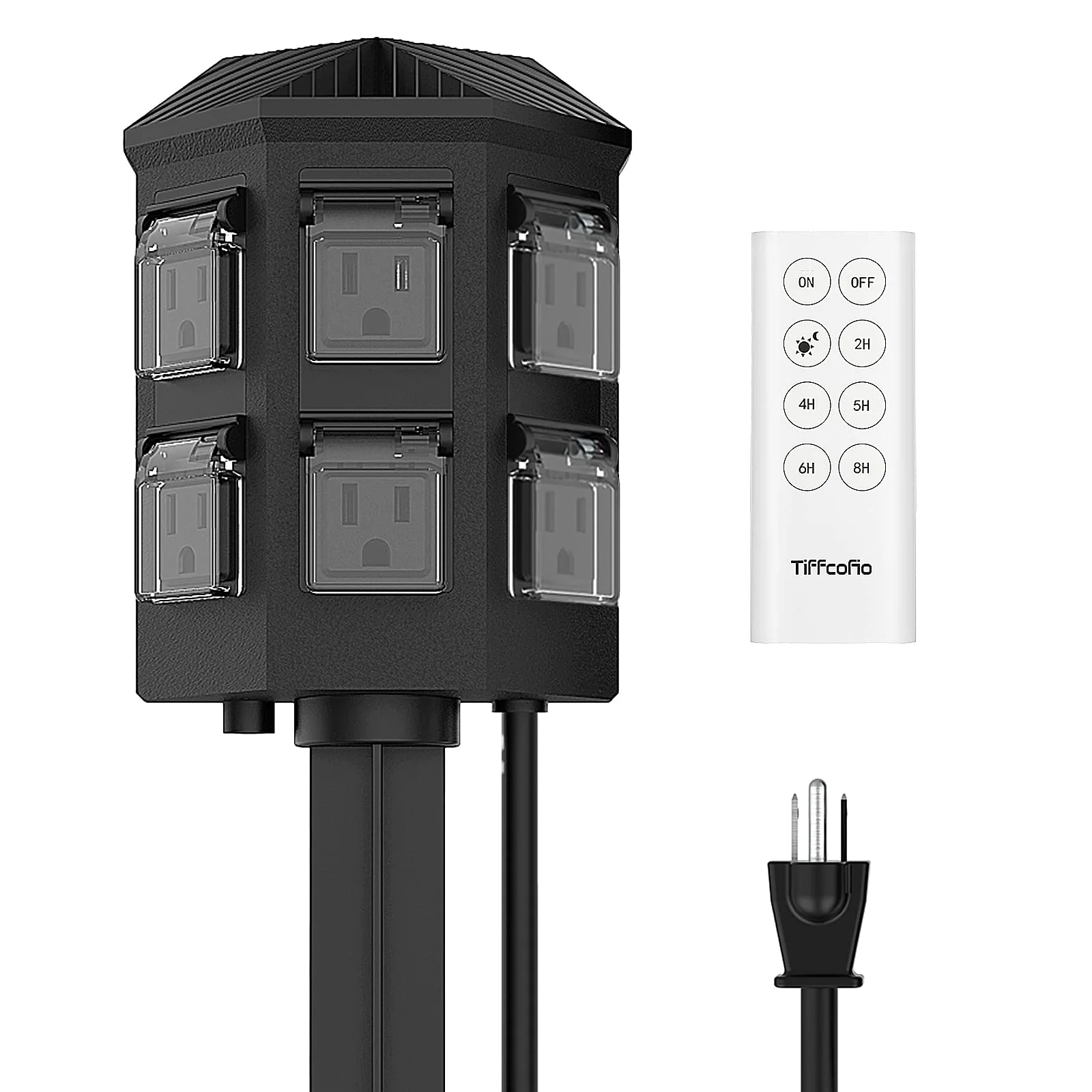
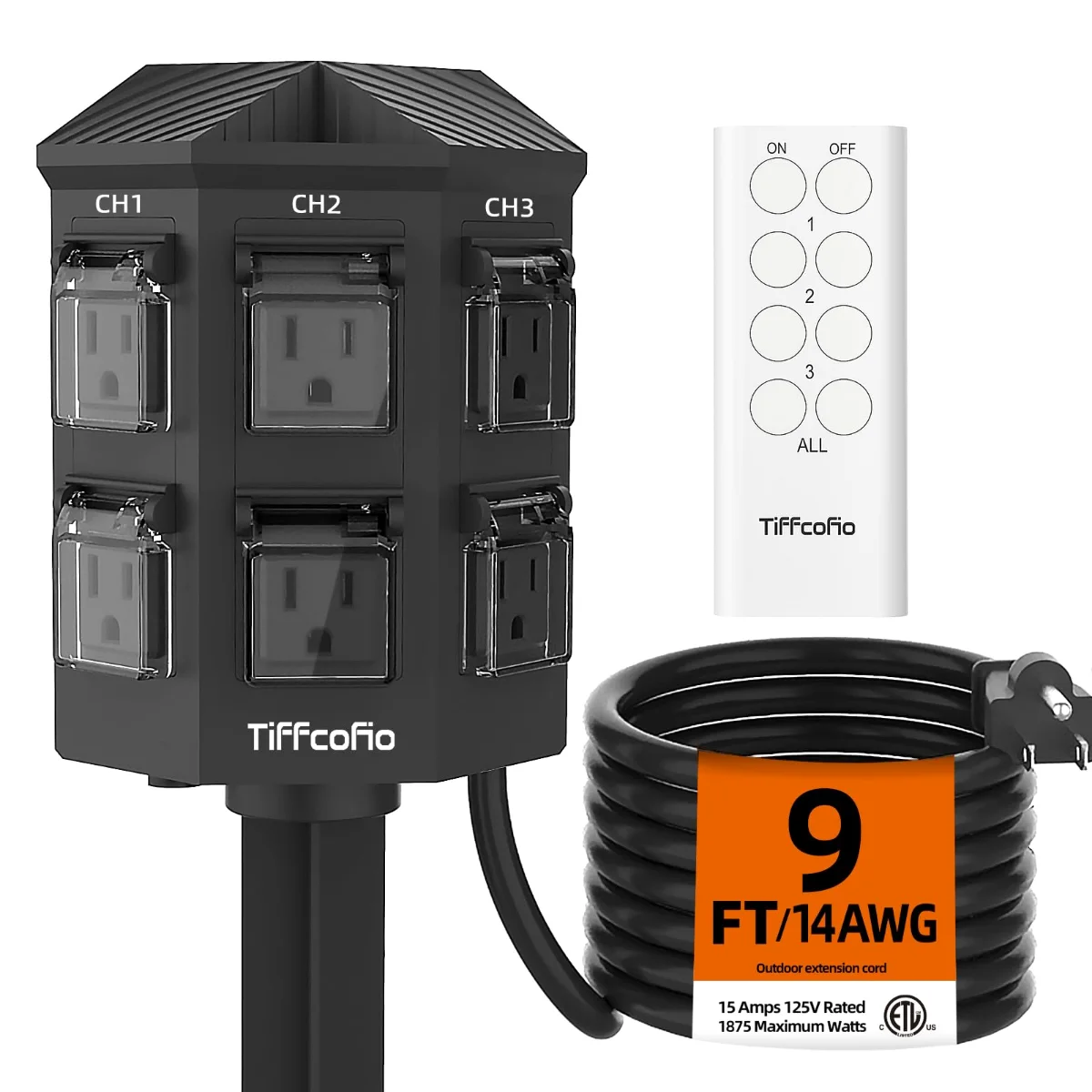
A remote outlet does not follow a schedule. It puts the switch in your hand, up to about 100 ft away, through walls. The outdoor remote timers combine both: pick dusk-to-dawn or a countdown from the remote, from inside the house.
Indoor or outdoor
An outdoor timer is built for rain and cold, with covers over its grounded outlets. Hang it with the outlets facing down, keep the covers closed and plug it into a GFCI-protected outlet, as the U.S. Consumer Product Safety Commission asks for outdoor lights. An indoor timer stays indoors.
Match the rating to the load
Every timer states its rating in amps and watts. Add up the watts of everything you plug into it and stay under the rating. A motor, a pool pump for example, draws more for a moment when it starts than its running figure, so leave headroom or pick the 20 A pool timer. The Electrical Safety Foundation adds that heat-producing appliances belong in a wall outlet on their own.
In the range
The timers people rate most

Ready when you are
Pick the product, then the length
Every length, pack and outlet count in the TiFFCOFiO selection is one click from here, and you pick the exact one on the next page.

The button opens the full range at our retail partner in a new tab.